

Spinal Decompression Melbourne | Cherrett Chiropractic
Home / Spinal Decompression Melbourne
CHERRETT CHIROPRACTIC • CLYDE NORTH
SPINAL DECOMPRESSION MELBOURNE | CHERRETT CHIROPRACTIC
Serving Clyde North, Narre Warren, Berwick, Officer, Cranbourne and surrounding south-east suburbs
If you've been living with persistent back or neck pain, and you've tried physio, massage, medication, and maybe even other chiropractors, spinal decompression in Melbourne might be the step you haven't taken yet.
At Cherrett Chiropractic in Clyde North, we offer non-surgical spinal decompression as part of a structured, clinically guided program. Every program begins with a thorough clinical assessment including X-rays and neurological screening to confirm decompression is appropriate for your condition and to build a protocol tailored to your diagnosis.
BOOK YOUR INITIAL CONSULTATION AT CHERRETT CHIROPRACTIC TODAY.
Not sure if spinal decompression is right for you? The first step is a proper clinical assessment — not a generic consultation. We'll examine your spine, review your scans, and give you a clear answer.

Comprehensive spinal examination.
Review of X-rays, MRI, or CT scans.
Clear explanation of whether you are a suitable candidate.
Structured next-step plan with no guesswork.


New patients welcome. Clyde North, south-east Melbourne
WHAT IS SPINAL DECOMPRESSION THERAPY?
Spinal decompression is a non-surgical, drug-free treatment that gently pulls the spine apart to create space inside compressed or damaged discs.
When a disc is under pressure — whether from a bulge, herniation, or long-term degeneration — it loses height, loses hydration, and begins pressing on the nerves running alongside it. That's what creates the pain, the stiffness, the shooting sensations down the leg or arm.
Decompression works by reversing that pressure. The table creates a controlled distraction force that opens up the disc space, reduces nerve compression, and creates the conditions the disc needs to absorb fluid and nutrients again — essentially giving it the environment to repair itself.
Not sure if spinal decompression is right for you? The first step is a proper clinical assessment — not a generic consultation. We'll examine your spine, review your scans, and give you a clear answer.
WHAT CONDITIONS CAN SPINAL DECOMPRESSION HELP WITH?
Spinal decompression is commonly used for:


DISC BULGES
where the outer disc wall has weakened and is pressing on a nerve

.png)
SCIATICA
nerve pain, numbness, tingling or aching radiating from the lower back through the buttock and into the leg or foot

DISC HERNIATIONS
where disc material has pushed through the outer wall
.png)
CERVICAL RADICULOPATHY
nerve pain, numbness, tingling or aching radiating from the neck into the shoulder, arm or hand

DEGENERATIVE DISC DISEASE (DDD)
where discs have lost height, hydration and structural integrity over time
.png)
CHRONIC LOWER BACK PAIN
Ongoing lower back pain associated with disc involvement or structural changes.
.png)
NECK PAIN
Neck pain with or without referred symptoms into the upper limbs.
Why The Way We Deliver Decompression Matters
Not all spinal decompression is the same. The technology used, the clinical screening behind it, and the way each session is tailored all determine whether you get lasting results or temporary relief that fades within months.
HERE'S WHAT SETS CHERRETT CHIROPRACTIC APART


ADVANCED SPINAL DECOMPRESSION TECHNOLOGY
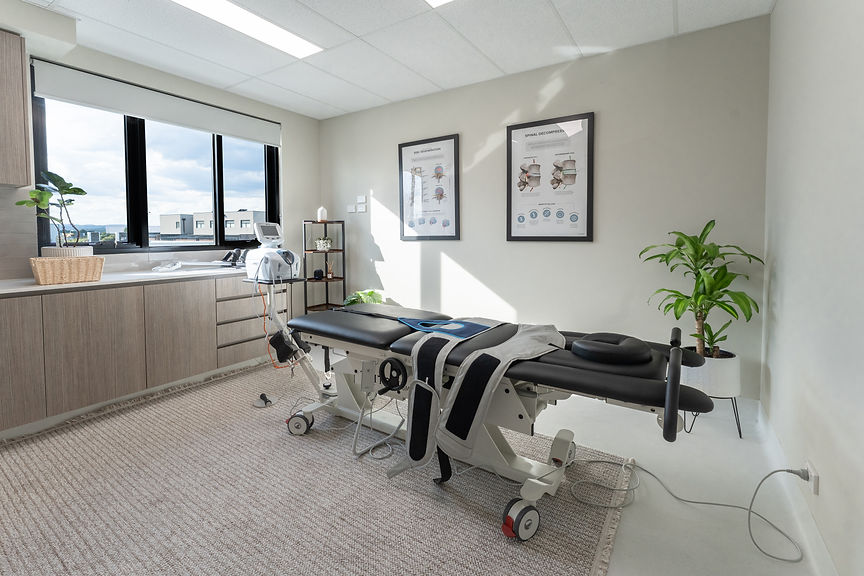
We use a modern, computer-controlled spinal decompression table, not old-style traction equipment. The table automatically adjusts the force during each session so your muscles stay relaxed and the treatment reaches the disc where it needs to.
.png)
PROGRESSIVE FORCE PROTOCOLS — BUILT AROUND HOW YOUR BODY RESPONDS
Force is progressively increased across sessions as your body adapts and your disc tolerates greater decompression. This allows the disc to receive increasing therapeutic benefit without triggering the muscle resistance that limits results.

THOROUGH CLINICAL ASSESSMENT — FOR YOUR SAFETY AND YOUR RESULTS
Spinal decompression is not suitable for everyone. Before any treatment begins, Dr. Cherrett will conduct a full assessment (including X-rays) to confirm it is safe and appropriate for your specific condition.
.png)
MEASURABLE OUTCOMES — NOT
JUST HOW YOU FEEL
Symptom relief is the starting point, not the goal. Follow-up X-rays at the appropriate stage of your program document the structural changes taking place, so you
can see the evidence of your improvement, not just feel it.

EVERY PROGRAM IS TAILORED TO YOUR SPECIFIC PRESENTATION
Every disc condition is different — which is why every program at Cherrett Chiropractic is built specifically for you. The type of treatment and length of your program are based on your diagnosis, how severe your condition is, and the symptoms you're experiencing.
.png)
STRUCTURED PROGRAMS, NOT
OPEN-ENDED SESSIONS
Every decompression patient at Cherrett Chiropractic is on a structured program with defined clinical goals at each stage. You know exactly what your program involves, how long it runs, and what we are working toward together.
WHAT DOES THE RESEARCH SAY?
The clinical evidence behind spinal decompression is well-established

30% REDUCTION IN HERNIATED DISC VOLUME — VISIBLE ON MRI
A 2022 clinical study found non-surgical spinal decompression produced measurable shrinkage of herniated disc material on MRI scans, alongside significant reductions in pain intensity.

GREATER PAIN RELIEF, MOBILITY AND QUALITY OF LIFE — BACKED BY CLINICAL RESEARCH
A peer-reviewed study of 60 patients with sciatica-type leg pain found that spinal decompression produced significantly better outcomes across every measure compared to standard physical therapy alone — including pain, disability, flexibility and quality of life.

DISC HEIGHT RESTORED FROM 7.5MM TO 8.8MM — CONFIRMED ON CT SCAN
Patients with degenerative disc disease showed measurable disc height restoration after a 6-week decompression protocol — structural change documented on imaging, not just reported symptoms.
7 IN 10 PATIENTS ACHIEVED NEAR-COMPLETE PAIN RELIEF — ACROSS 778 CASES
A study across 22 medical centres found that 71% of patients with herniated or degenerative discs reached near-complete pain relief with spinal decompression. Spinal mobility improved in 77% and daily activity scores improved in 78%.
PRESSURE INSIDE THE DISC DROPS TO BELOW -100 MMHG
Research published in the Journal of Neurosurgery demonstrated that spinal decompression creates negative pressure levels that standard traction cannot achieve — the vacuum effect responsible for drawing disc material back toward its normal position.
PAIN DROPPED FROM 6 OUT OF 10 TO LESS THAN 1 — STILL HOLDING 7 MONTHS LATER
In patients with chronic disc-related pain — most suffering for over five years — average pain scores fell dramatically after a structured decompression program, with results maintained at a 31-week follow-up and patient satisfaction averaging 8.55 out of 10.
YOUR SPINAL DECOMPRESSION JOURNEY AT CHERRETT CHIROPRACTIC
Here's exactly what the process looks like from day one.


STEP 1 — CLEARSPINE PAIN ASSESSMENT
Dr. Cherrett will conduct a thorough history, perf orthopaedic and neurological examination, and X-ray analysis to determine whether spinal decompression is appropriate for your specific presentation and to build a protocol tailored to your condition.
.png)
STEP 2 — REPORT OF FINDINGS
We walk you through exactly what we've found in your scans and examination, explain what's happening in your spine, and present a structured care program built around your condition and results. You'll leave with a clear picture of the problem and a clear plan to address it

STEP 3 - ONGOING DECOMPRESSION THERAPY
Each visit involves your spinal decompression session, delivered using a progressive protocol that adapts as your body responds. Sessions are shorter in the early phase as your spine builds tolerance, progressing toward 20–25 minutes as you move through the program.

STEP 4 — PROGRESS REASSESSMENT
We reassess regularly throughout your program so you can see objective evidence of improvement — not just take our word for it.

HOW MANY SESSIONS WILL I NEED?
The exact program recommended for your case will be determined after your initial assessment and presented at your Report of Findings appointment.
Your program will be tailored to your specific presentation, the severity of the disc involvement, and how your body responds in the early stages of treatment.
IS SPINAL DECOMPRESSION SAFE?
Yes — when performed by a qualified chiropractor following a thorough assessment, spinal decompression is considered a safe, well-tolerated treatment.
Most people find the sessions relaxing. Some experience mild muscle soreness in the first few visits as the spine adapts to distraction forces, which typically settles quickly.
SPINAL DECOMPRESSION IS NOT RECOMMENDED FOR:

Pregnancy.
Spinal fractures (recent or unstable).
Spinal fusion with hardware.
Severe osteoporosis.
Spinal tumours or infections.
Aortic aneurysm or abdominal pressure conditions.
Severe joint instability or hypermobility.
During your initial consultation, Dr. Cherrett will screen for all contraindications before any treatment begins.


MEET YOUR DOCTOR
ABOUT DR. ASHLEY CHERRETT
Dr. Ashley Cherrett (BAppSc(Chiro), BHlthSc) is the principal chiropractor and owner of Cherrett Chiropractic in Clyde North. He practises using the Chiropractic BioPhysics (CBP) technique — a systematic, evidence-based approach to spinal correction that prioritises measurable structural outcomes over short-term symptom management.
Cherrett Chiropractic serves patients across the south-eastern suburbs of Melbourne, including Clyde North, Cranbourne, Narre Warren, Berwick, Officer, and Beaconsfield.

Double Degree Qualified
8K+
Patient Appointments
190+
5-star Google Reviews
BOOK YOUR NEXT STEP
READY TO FIND OUT IF SPINAL DECOMPRESSION IS RIGHT FOR YOU?
If you've been living with disc-related back or neck pain and you're ready for some clear answers, the first step is a thorough assessment including X-rays and an honest explanation of what's happening in your spine
Most people who come to us have already spent months trying things that haven't worked. If that sounds familiar, book an assessment today — it's the right next step.

BOOK YOUR INITIAL CONSULTATION AT CHERRETT CHIROPRACTIC TODAY.
📍 Clyde North, Melbourne VIC